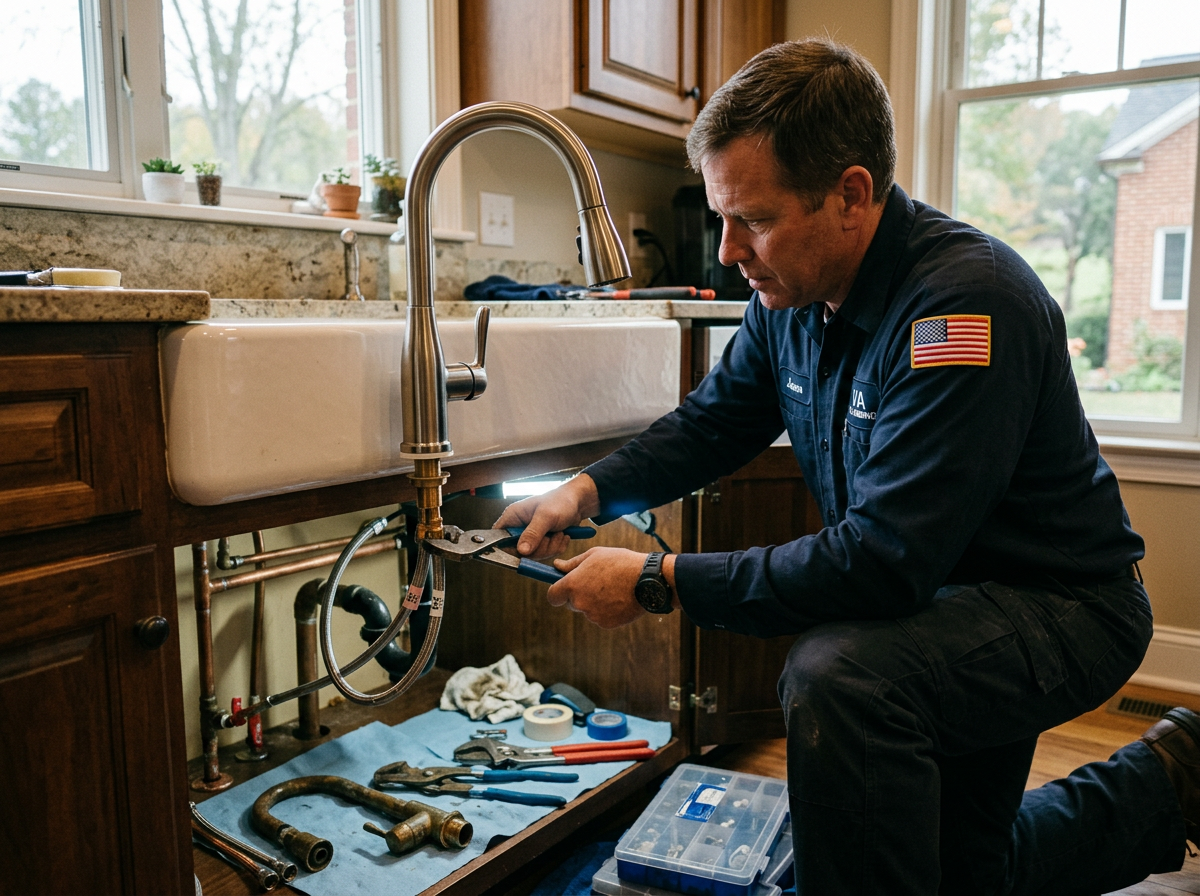
Sometimes repair isn't the right answer. A faucet with a cracked body, heavy corrosion, discontinued parts, or a finish that is flaking off is usually better replaced. So is a faucet you simply don't want anymore. Replacement is also the time to fix the things around the faucet that cause the next leak.
When replacement makes more sense than repair
- The faucet body is cracked or leaking from the casting itself
- Parts are no longer made for that brand or model
- It has been repaired repeatedly and keeps failing
- Heavy scale or corrosion has fused parts together
- You're changing sinks, countertops or the style of the room
Choosing a faucet for well water
If your home is on a private well, as most in Powhatan County are, a faucet with a ceramic disc cartridge generally handles hard water and grit better than older washer-style valves. Pick a brand with parts that are easy to find, so a future cartridge replacement is a quick repair rather than a new faucet. You're welcome to supply your own faucet, or ask the plumber what they recommend.
What the installation includes
The old faucet is removed and the sink deck cleaned. The new faucet is mounted and sealed, and the supply lines are connected. Old shut-off valves that won't close fully or leak at the stem are best replaced at the same time, since they are only reachable with the faucet out. On kitchens, the dishwasher connection and any filter or ice-maker line under the sink are checked while the cabinet is open.
Not sure if yours can be saved? Start with leaking faucet repair, kitchen faucet repair or bathroom faucet repair, and the plumber will tell you whether repair or replacement is the better value.
Call for a quote on faucet repair and replacement in your home.
How it works
- 1
Assess
Confirm replacement is the right call and check the sink holes and valves.
- 2
Remove
Old faucet removed and the deck cleaned.
- 3
Install
New faucet mounted, sealed and connected.
- 4
Test
Flow, drainage and every connection checked.